STUDIO T'ALYNE
  • Welcome to Studio T'Alyne
  • About
  • CV
  • T'Alyne Projects
  • Blog
  • Collections
  • Collector EXHIBITION

Attention Curators:
Listed on
Foundwork

Attention Dealers, Collectors, Galleries:
Inventory listed on ArtCloud and ArtArchive.
PDF presentation of Collection Available. 

For more information click links
or contact The Office 

Picture
Follow on X (Twitter)
"I lose myself in my art. All the sketches and drawings represent the hours I have spent. I continue to draw because it is so relaxing. A beautiful drawing may take hours and hours, but it's worth it. I won't ever lose my art. My art will always be with me in my imagination. That is a very comforting thought and I consider myself extremely lucky to have the ability to draw. Joy is the thrill of taking a risk and it all pays off."

INTERVIEW CLICK HERE 
Click: [email protected]
CLICK TO VIEW ARTSY PROFILE
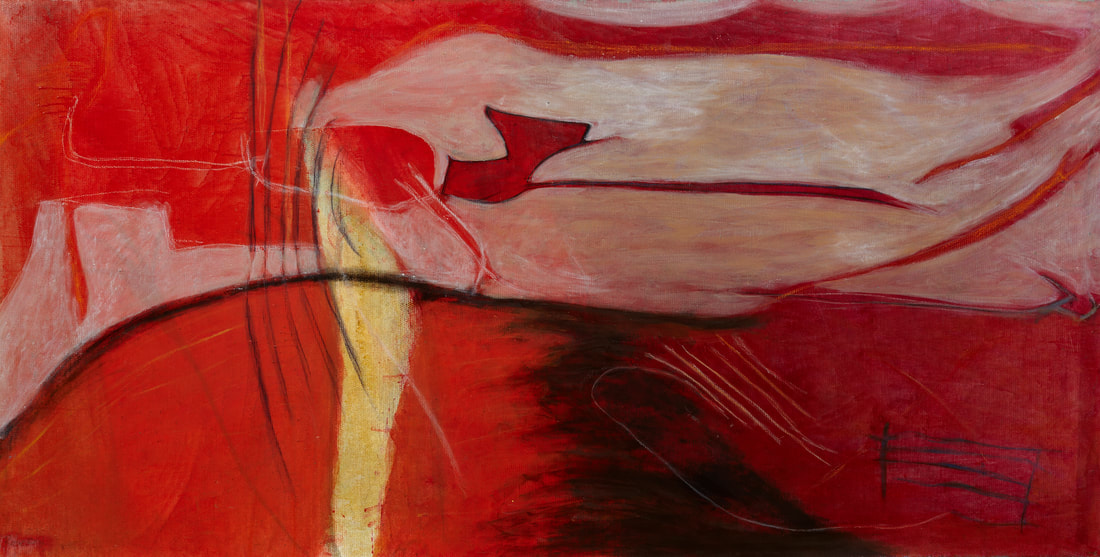
Clarity Collection
Pigment and varnish on fiberglass
21"x39.5" and 39.5"x43"
In the stillness of nature, solitude offers a sanctuary for quiet reflection, a rare pause from life’s clamor. Surrounded by whispering trees, rustling leaves, or a gentle stream, the mind finds clarity. Away from screens and schedules, one can breathe deeply, untangling thoughts that swirl in daily chaos. Nature’s vastness, towering mountains or endless skies, humbles the ego, reminding us of our small yet significant place in the universe. In these moments, solitude isn’t loneliness but a conversation with the self. The chirping birds or distant wind carry no judgment, allowing truths to surface: dreams, fears, or forgotten joys. This sacred pause fosters gratitude, as the heart syncs with the earth’s rhythm. Time spent alone in nature is not escape but reconnection, a chance to listen, heal, and rediscover purpose in the quiet embrace of the wild.
Boom Collection
Pigment and Varnish on Fiberglass
Image: 30.5"x39.5"
Frame: 33.5"x46"
A boom is the explosive outcome of a gateway opening, a surge of activity, innovation, or prosperity that reshapes the world. Booms are often unpredictable in their scope and impact, as they amplify the potential of the gateway far beyond initial expectations. They can manifest as economic growth, cultural shifts, or technological revolutions, but they often come with trade-offs, including disruption and inequality. The story of human progress is a story of gateways and booms, moments of breakthrough that unleash waves of transformation. The relationship between gateways and booms is not without tension. Booms often outpace society’s ability to adapt, leading to inequality, disruption, or unintended consequences. Gateways and booms are inherently linked. The former creates the conditions for the latter, but the latter often amplifies the gateway’s impact in unpredictable ways. This interplay is not linear but cyclical. Each boom lays the groundwork for new gateways.
Gateway Collection
Pigment and collage on wood panel
13"x13"
Frame: 15.25"x15.25"
A gateway is a point of access, a mechanism or moment that enables a leap from one state to another. Gateways are characterized by their ability to remove barriers; geographical, intellectual, or economic; and create opportunities for exponential growth. They are not merely incremental improvements but paradigm shifts that reconfigure how societies operate. The gateway opens the door, but it is the boom that shapes the world beyond. Gateways and booms are inherently linked: the former creates the conditions for the
latter, but the latter often amplifies the gateway’s impact in unpredictable ways. This interplay is not linear but cyclical. Each boom lays the groundwork for new gateways.
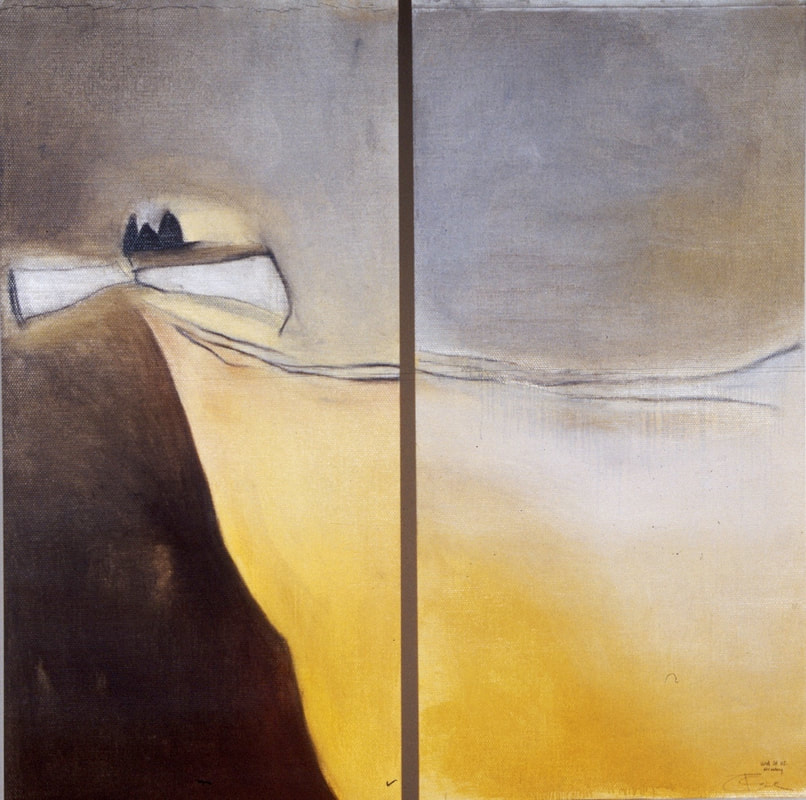
Perception versus Perspective Collection
Varnish, pigment, fiberglass
30.25"x39.5" and 39"x59" and 39.5"x39.5"
Perception and perspective are two terms used interchangeably in casual conversation, yet they represent distinct concepts that shape how we understand and interact with the world. Both are rooted in the human experience, influencing our thoughts decisions, and relationships. However, perception refers to the sensory and cognitive process of interpreting information, while perspective is the broader viewpoint or mental framework through which we evaluate that information. Understanding the difference between these two ideas reveals how they work together to define our reality. Perception is inherently subjective because it is filtered through individual factors such as biology, emotions, and past experiences. This subjectivity means that two people can perceive the same event differently. Perspective, on the other hand, is a mental standpoint or attitude we adopt when interpreting our perceptions. It is less about the immediate sensory experience and more about the broader framework shaped by beliefs, values, culture, and life experiences- that we use to evaluate and contextualize what we perceive. Perspective is the “why” behind our reactions, the lens that gives meaning to the raw data of perception. While perception is about What we notice, perspective is about How we judge or understand it. Perspective tends to be more stable than perception because it is tied to deeper, more enduring aspects of identity, though it can evolve over time with new experiences or insights. The distinction between perception and perspective lies in their scope and function. Perception is immediate, sensory-driven, and focused on the present moment-it answers the question, “What am I experiencing?” Perspective, by contrast, is reflective, conceptual, and often forward-looking- it answers, “What does this mean to me?” Perception is the raw material; perspective is the story we tell ourselves about that material. In essence, perception and perspective are two sides of the same coin, each playing a vital role in how we navigate the world. Perception is the initial, sensory encounter with reality, while the mental framework that gives us meaning. Recognizing their differences allows us to better understand ourselves and others, as it reveals why two people can experience the same event yet walk away with entirely different interpretations. By examining both our perceptions and perspectives, we gain the power to question our assumptions, broaden our viewpoints, and engage more thoughtfully with the complexities of life.  
An Ideal Hope Collection
Acrylic on paper
8 3/4"x11 1/2"  |  22.2cmx29.2cm
Hope is a powerful force that enables individuals to persevere through challenges and envision a brighter future. I define hope as compromising belief, goals, and pathways, emphasizing its role in fostering resilience and determination. It is both a mindset and spiritual practice, helping people cope with hardships, focus on posit possibilities, and live mindfully. Hope is not passive; it requires action and preparation to achieve desired outcomes. Ultimately, hope inspires optimism, strengthens wellbeing and serves as a remedy for despair, making life meaningful even in adversity.


Rain Collection
Fiberglass, varnish and pigment
​Image sizes: Verticals 2mx1m. Horizontals 1mx2m
Why it rains more on mountainsides?
    When air rises, its temperature falls. Warm air can hold more water vapor than cold air can, so reducing the temperature of the air raises its relative humidity (RH), which is the amount of water vapor present in the air as a percentage of the amount needed to laureate the air at that temperature.
    There is an altitude at which the RH in fishing air reaches 100 percent, and the air becomes saturated. This is called the “lifting condensation level.” When air rises above the lifting condensation level, its water vapor starts condensing to form clouds. When the clouds are big enough, their droplets or ice crystals merge until they are heavy enough to fall as rain or snow. No cloud forms or precipitation falls from air in which the RH is below 100 percent.
As air approaches the mountain it is forced to rise in order to cross the high ground. This is called ‘Orographic lifting’ (from the Greek words Oros, meaning ‘mountain,’ and graphs, meaning ‘writing’ or ‘written’.) The air is dry until it is lifted above the lifting condensation level when cloud starts to form and precipitation begins to fall on the mountainside. The air continues to rise and more cloud forms. This intensifies the precipitation, but only on the mountainside, fine weather continues over the low ground.
    When the rising air reaches the top of the mountain, it may continue to rise or may subside down the opposite side (lee) of the mountain. It is continues rising, eventually it will lose enough water for precipitation to end, although cloud may extend some distance on the lee side. If the air subsides, it will sink below the lifting condensation level once more. Precipitation will then cease, and the cloud will dissipate as its droplets evaporate. The overall result is that mountainsides receive more precipitation than the low ground surrounding the mountain does.
Picture
Rose Rain. Fiberglass, varnish and pigment. 1mx2m (3.3ftx6.9ft)


Cloud Collection
Fiberglass, varnish, pigment
Image sizes: Vertical  2mx1m  Horizontal 1mx2m
Clouds form when the invisible water vapor in the air condenses into visible water droplets or ice crystals. For this to happen, the parcel of air must be saturated, i.e. unable to hold all the water it contains in vapor form, so it starts to condense into a liquid or solid form. Clouds are very important and help make the Earth habitable. Clouds can cool the planet by reflecting the sun's rays, or warming the planet especially on cold cloudy nights. Clouds are also important at how water moves around the Earth, and where it rains most or very little. Even though a cloud weighs tons, it doesn't fall on you because the rising air responsible for its formation keeps the cloud floating in the air. The air below the cloud is denser than the cloud, thus the cloud floats on top of the denser air nearer the land surface. Without clouds, average surface temperatures would rise by as much as 22 degrees Celsius. This extreme temperature spike would not only destroy the habitats of most flora and fauna, killing off whatever survived the drought, it would also melt the polar ice caps and cause massive flooding of coastal cities.
Picture
Aout, Germany. Fiberglass, varnish, pigment. 2mx2m (6.6ftx6.6ft)

Agent/Architect/ Interior Design Collaboration/ Bespoke Installations
Public Art/ Private Collections
Studio Visits Welcome
 
Inventory listed on ArtCloud and ArtArchive and Foundwork

Studio T'Alyne located in the mountains of Southern Colorado on a private Ranch.
Click on Artsy Logo to go to T'Alyne's profile. 
Picture
Powered by Create your own unique website with customizable templates.
  • Welcome to Studio T'Alyne
  • About
  • CV
  • T'Alyne Projects
  • Blog
  • Collections
  • Collector EXHIBITION